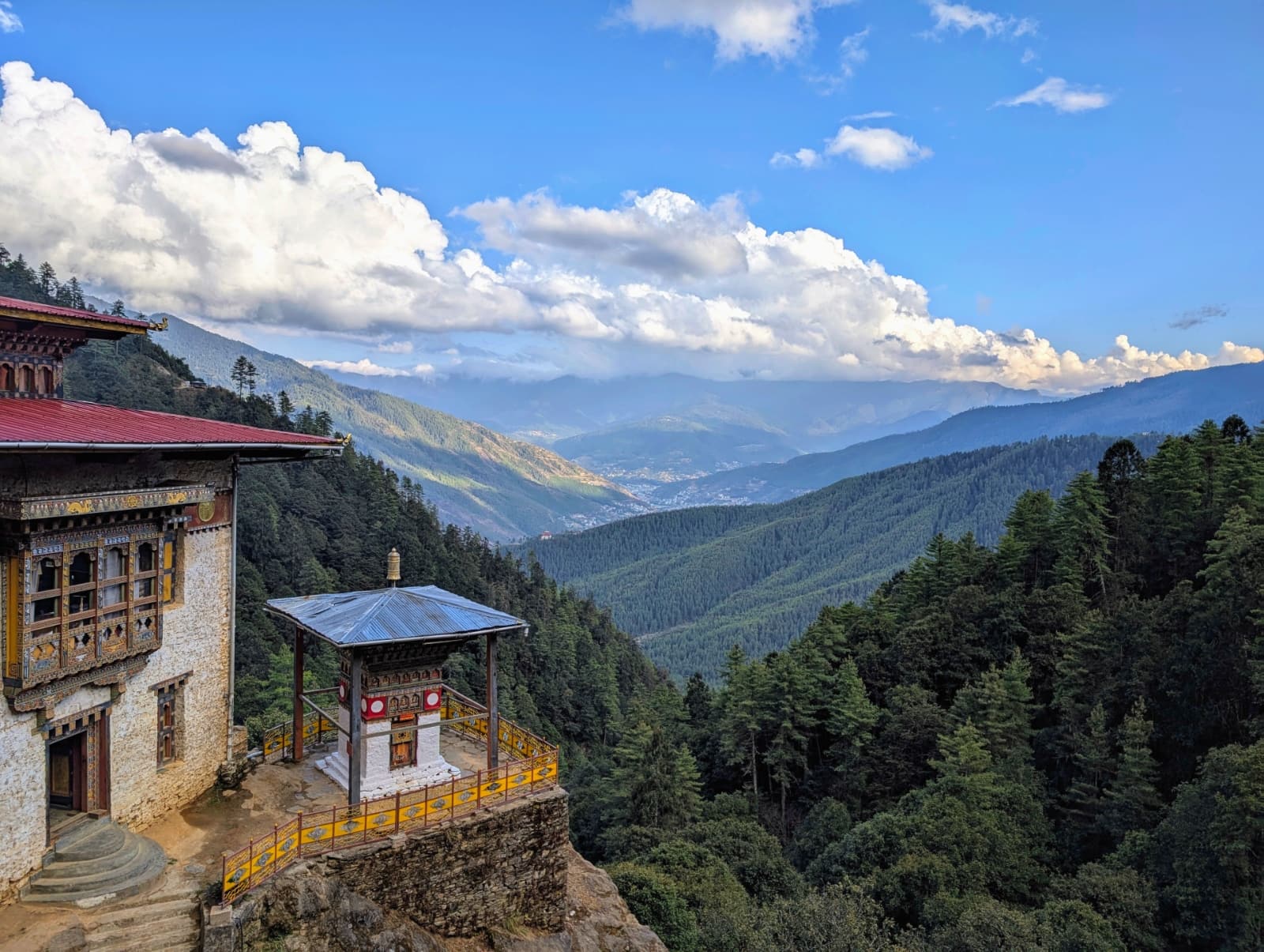

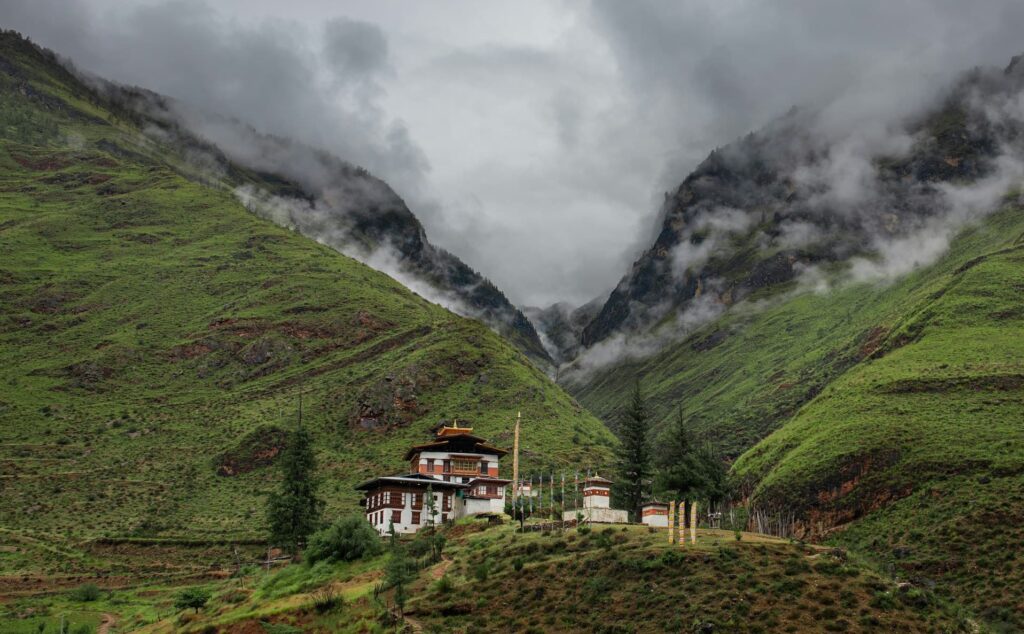
Tucked between the Himalayas, Bhutan is a kingdom unlike anywhere else — a place where Gross National Happiness outweighs GDP, where dzongs rise like fortresses of faith, and where prayer flags ripple across valleys in timeless rhythm. Most visitors remain in the west, drawn to the dramatic cliffs of Tiger’s Nest, the grandeur of Punakha Dzong, and the city bustle of Thimphu. But venture east of these popular touchpoints and Bhutan begins to reveal something quieter and far more extraordinary. This is where the kingdom stretches wide and wild, where time slows to a crawl, and where the hidden places to visit in Bhutan are truly bucket list-worthy.
In this guide, we’ll take you through eight gems in central and eastern Bhutan that most travelers miss, but you’ll want to keep all to yourself.
👉 Other highlights: Check out our first-timer’s guide to Bhutan for more inspiration!
📍 Introduction: Bhutan beyond the guidebooks
This part of the country, which spans valleys like Trongsa, Bumthang, and Ura, is home to fewer than 100,000 residents, scattered across highland villages and deeply spiritual hamlets. Some towns see just a handful of visitors per week. It’s here that Bhutan’s oldest monasteries cling to cliffsides and sites like the “Burning Lake” of Mebar Tsho remain sacred to the locals.
Bumthang alone hosts dozens of monasteries, many of which predate the 17th century and are still active. And while the western circuit receives the majority of Bhutan’s visitors, a fraction of tourists ever venture this far east, leaving trails quiet, temples unguarded, and moments entirely your own.
For those craving something beyond postcard views and curated stops, these are the hidden places to visit in Bhutan that offer a remote, raw, and reverent atmosphere. With 70% of the kingdom covered in forest, over 50% of its land protected as national parks and sanctuaries, and carbon negativity woven into its way of life, this is a country where nature still dictates the rhythm of daily existence.
Travel route: How to explore central and eastern Bhutan
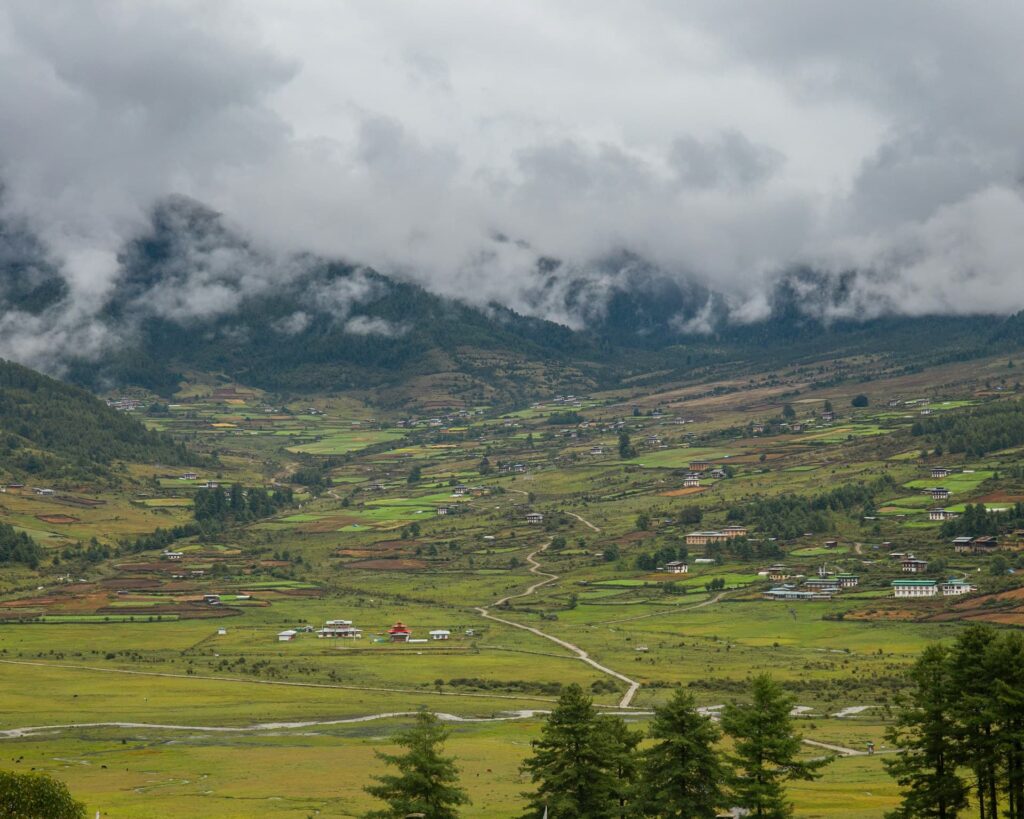
As you weave along the East-West Highway — Bhutan’s only arterial road — the scenery shifts dramatically. In Trongsa, dense conifer forests of blue pine and cypress give way to sweeping river valleys watched over by Trongsa Dzong, the ancestral seat of Bhutan’s royal family. Bumthang, often called the spiritual heartland of Bhutan, opens into broad, fertile plains where buckwheat and barley grow, apple orchards blossom, and monasteries rise from mist-shrouded hillsides. Climbing toward Ura, the air grows crisper, pastures widen, and yak herders appear against alpine backdrops of rhododendron forests and snow-dusted peaks.
While Paro and Thimphu showcase Bhutan’s polished exterior, these valleys reveal the kingdom’s soul: fewer hotels and luxury resorts, more authentic homestays. Fewer tourist signposts, more oral histories passed down through generations. Expect longer travel times (the roads wind like rivers through mountains), but the journey is its own reward.
- Getting there: Most itineraries begin in Paro and continue eastward via Thimphu → Punakha → Trongsa → Bumthang → and beyond. You’ll need at least 7–10 days to do it justice.
- What to expect: Fewer hotels but more eco-lodges, family-run guesthouses, and truly untouched landscapes.
1. Trongsa: The ancestral heart of Bhutan
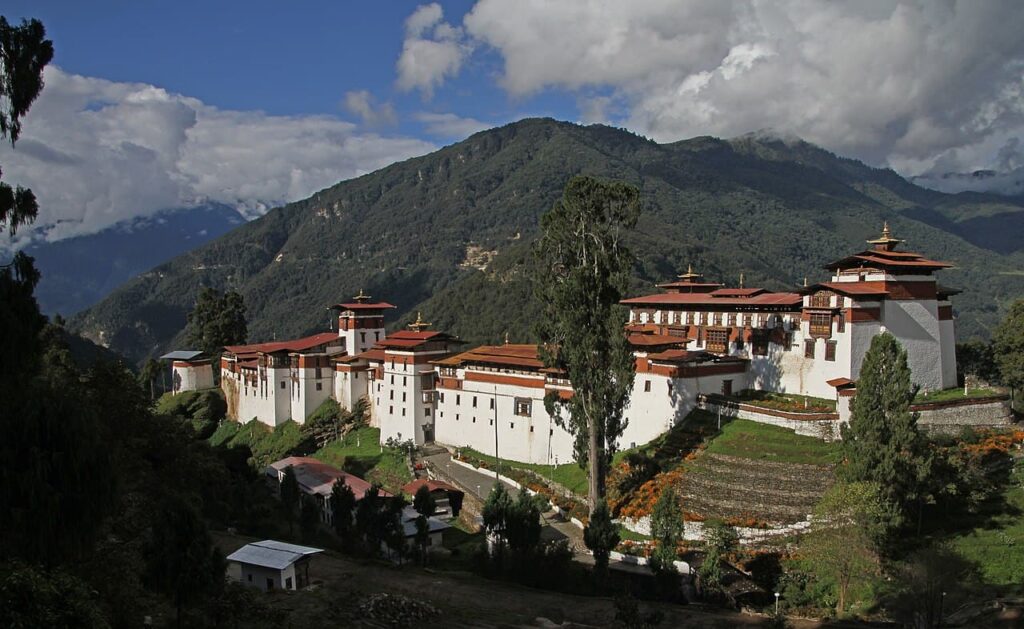
Perched high above a river gorge in the center of Bhutan, Trongsa is the spiritual and historical heartbeat of the kingdom. Its crown jewel, Trongsa Dzong, is the largest fortress in Bhutan, spilling dramatically across a ridge like a labyrinth of whitewashed walls and golden roofs.
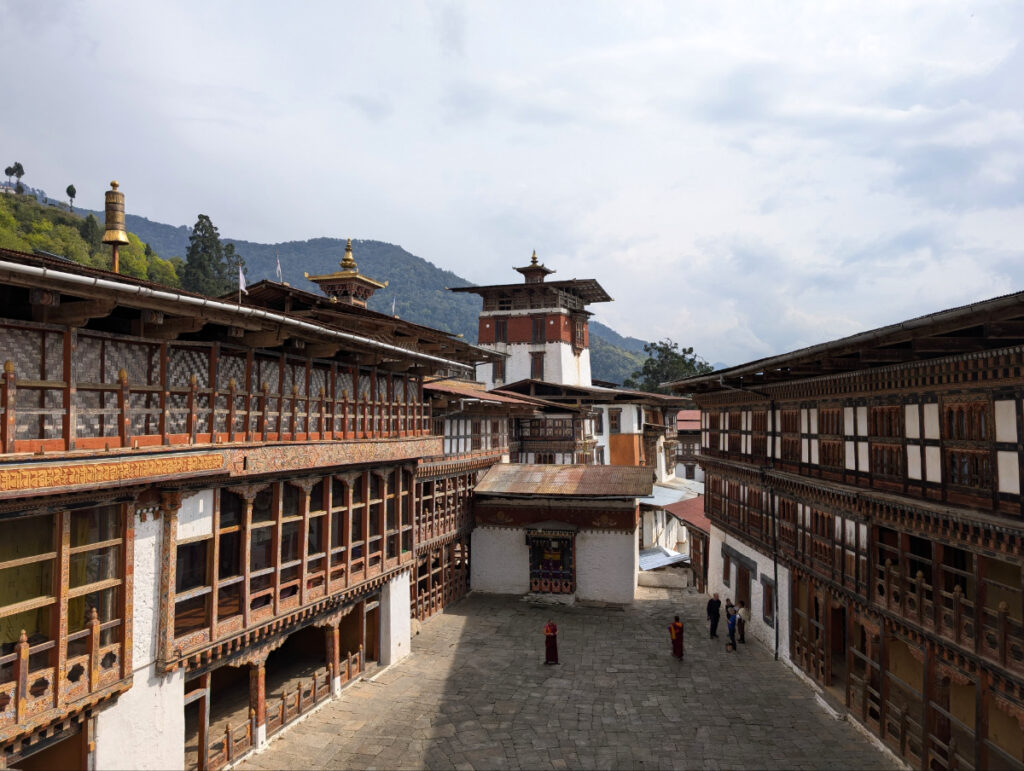
Once the seat of power for Bhutan’s royal family, Trongsa Dzong holds centuries of stories within its layered courtyards and monastic halls. Trongsa lies almost perfectly equidistant between Bhutan’s east and west, making it a symbolic and literal bridge between regions. Its position along the single east-west highway once gave it immense strategic control over the kingdom — no one could travel across Bhutan without passing through its narrow pass and dzong. Visit Trongsa Dzong in the quiet of early morning, when monks chant in candlelit rooms and clouds drift through the corridors like breath.
Must-dos:
- Explore the Tower of Trongsa (Ta Dzong): Once a watchtower guarding the dzong, this five-storey stone structure is now a fascinating museum filled with royal relics, ancient manuscripts, sacred masks, and an entire gallery dedicated to the monarchy. Don’t miss the conch-shell-shaped gallery on the top floor.
- Witness the Trongsa Tshechu: If timing aligns, the Trongsa Tshechu (usually held in December or January) is a stunning festival of color, mask dances, and spiritual performances held in the dzong’s main courtyard. A tshechu is a traditional Bhutanese festival held typically in honor of Guru Padmasambhava (Guru Rinpoche), the 8th-century Buddhist master credited with introducing Tantric Buddhism to Bhutan and Tibet.
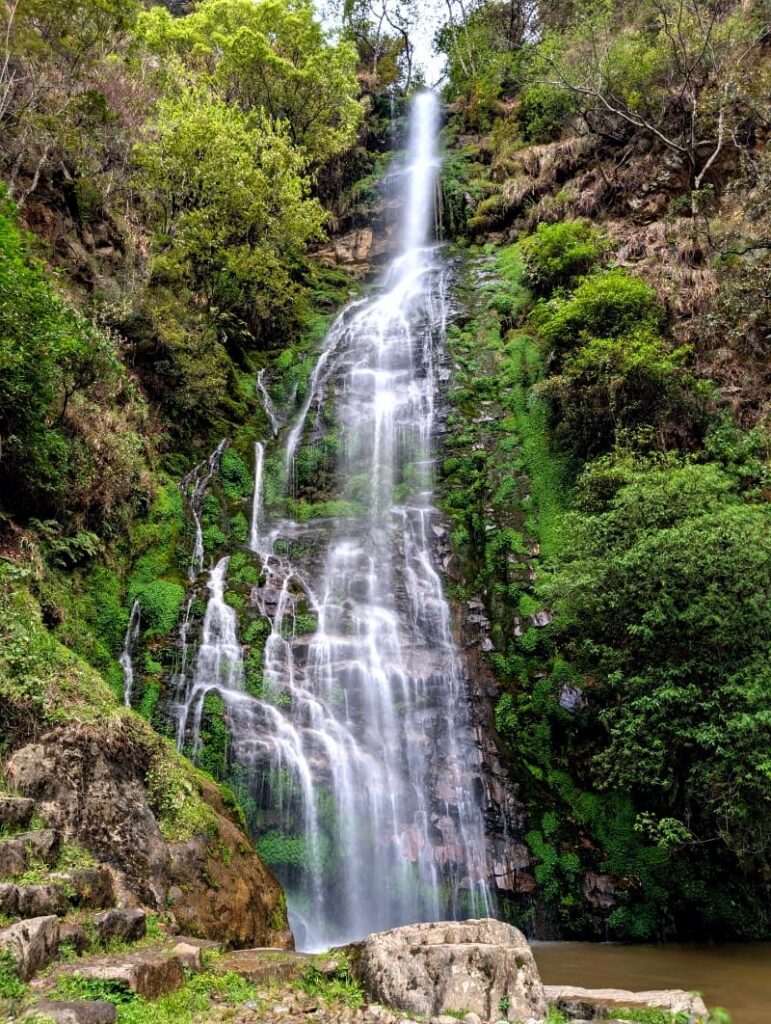
- Visit Willing Waterfall Café: About a 30-minute drive from town, this unique café sits by a stunning cascading waterfall, making it the perfect stop for tea, momos, or a leisurely Bhutanese meal with the sound of rushing water as your backdrop. It’s a serene break that offers both natural beauty and a touch of local hospitality.
2. Jakar & the Bumthang Valley: Bhutan’s spiritual core
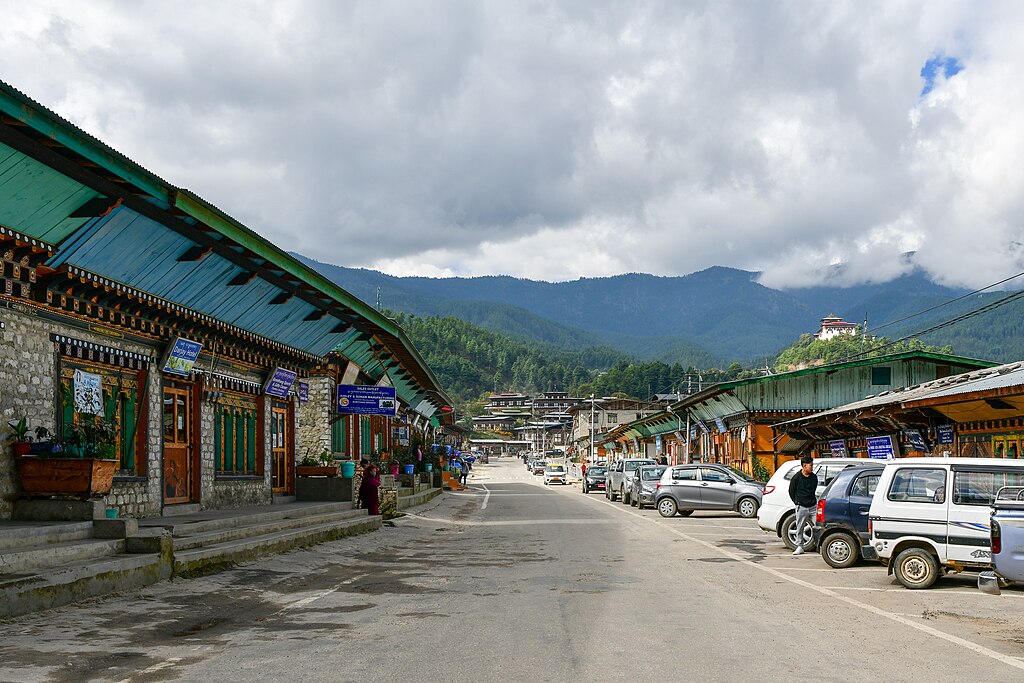
Bhutanese folklore says that Bumthang is where gods and ghosts whisper among cypress trees, and you’ll feel that mysticism immediately upon arrival. Several of the kingdom’s oldest Buddhist practices and lineages were born here, making it a living museum of spiritual tradition.
The Bumthang region actually comprises four distinct valleys — Chumey, Choekhor, Tang, and Ura — each with its own character, elevation, and set of legends. Jakar, the main town, is nestled in the Choekhor Valley and serves as the launchpad for deeper exploration. It is a tapestry of legend, healing springs, and sacred temples that trace Bhutan’s spiritual lineage.
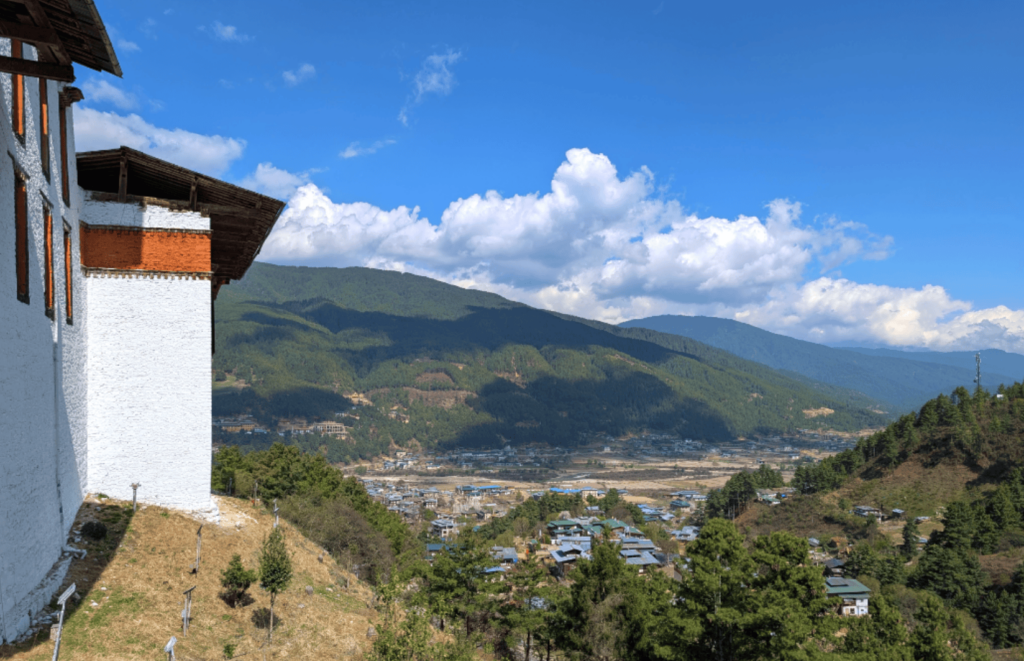
Jakar Dzong, nicknamed “The Castle of the White Bird,” watches over the valley like a silent guardian.
Don’t miss:
- Tamshing Lhakhang: Built in 1501 by Pema Lingpa, a great treasure revealer, this temple houses ancient mural paintings over 500 years old, untouched by restoration and still glowing in the flicker of butter lamps.
- Thangbi Lhakhang: Tucked away in the fields north of Jakar, this 14th-century temple is a sanctuary of calm, often missed by tourists but revered by locals. Visit during the Thangbi Mani Festival in autumn for intimate, community-led rituals and mask dances.
3. Kurjey Lhakhang: The sacred imprint of Guru Rinpoche
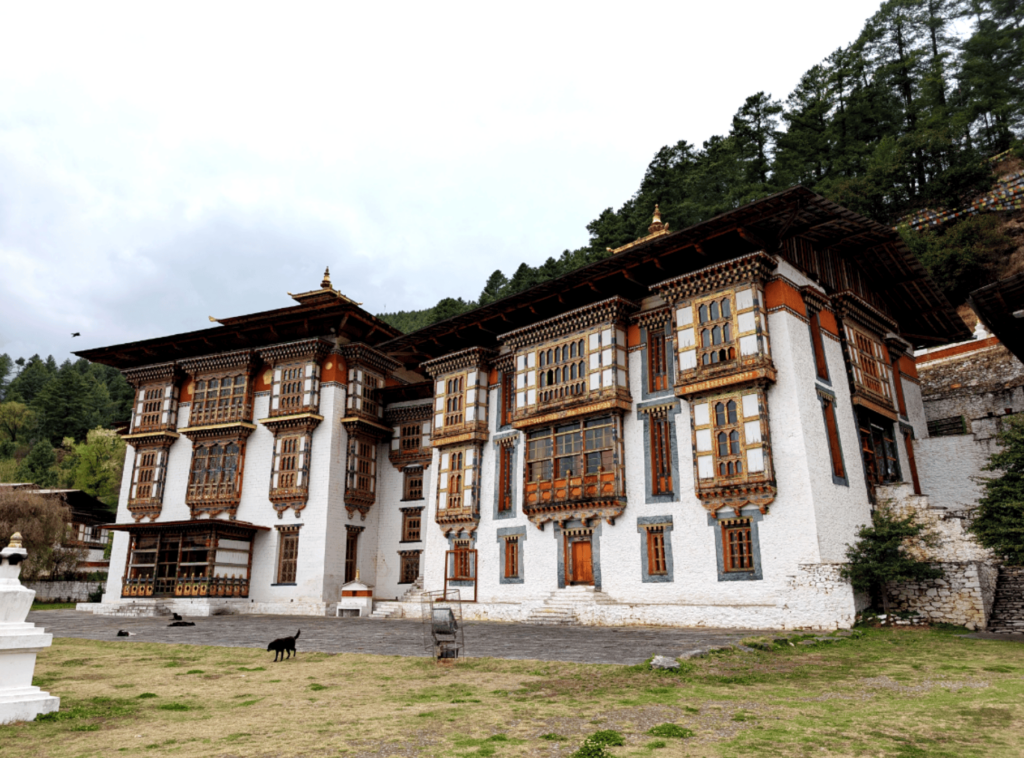
In the quiet folds of the Choekhor Valley lies Kurjey Lhakhang, arguably one of Bhutan’s holiest sites. This temple complex, cloaked in forested hills and hemmed by cypress trees, is not just a place of worship — it’s the spiritual heartbeat of Bumthang and a sacred waypoint for pilgrims across the Himalayas.
The name Kurjey literally means “Body Imprint”, and it refers to the sacred impression left by Guru Rinpoche (Padmasambhava) on the wall of a meditation cave inside the oldest temple. According to legend, the 8th-century master came to Bumthang to subdue a malevolent spirit that had afflicted a local king. After meditating in the cave, he left his body’s imprint behind — a divine seal that sanctified the valley forever.
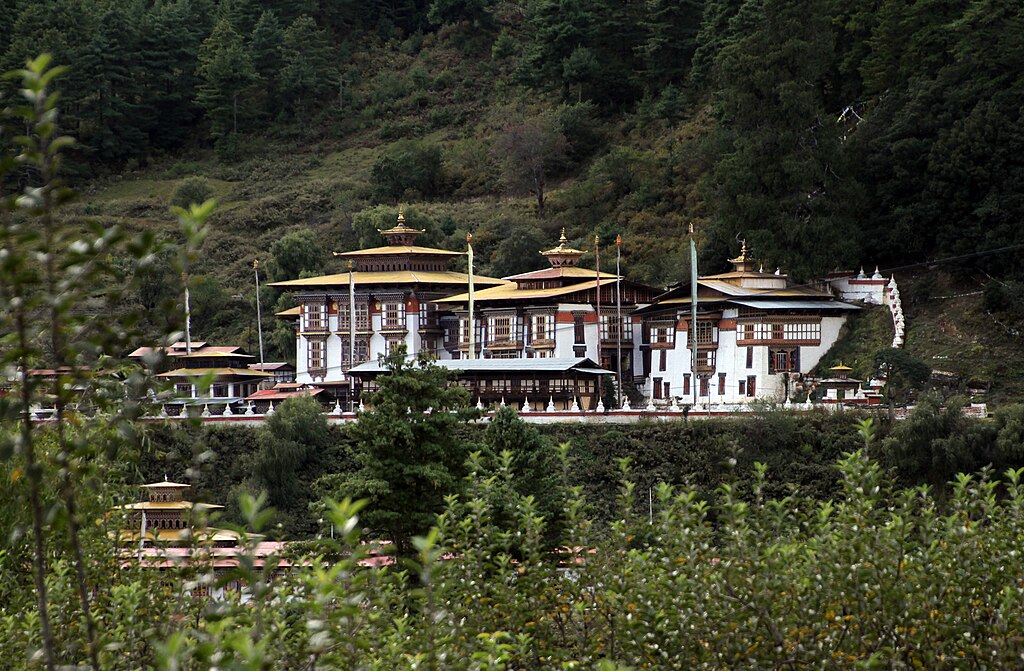
The temple complex
The Kurjey Lhakhang complex consists of three main temples, each built in a different era:
- Guru Lhakhang (built in 1652) — The oldest structure, containing the sacred cave and the Guru’s body imprint. Its dark inner sanctum glows with golden statues and murals depicting his journey through Bhutan.
- Sampa Lhundrup Lhakhang (built in 1900s) — Commissioned by Bhutan’s first king, this temple celebrates the long line of royal patronage tied to Kurjey. Its interiors are richly painted, its prayer halls wide and welcoming.
- Ka Gon Phor Sum Lhakhang (the newest) — Built under royal auspices in the 1980s, this temple complements the others with vibrant architecture and quiet spaces for reflection.
Between them stands an ancient cypress tree, said to have sprouted from Guru Rinpoche’s staff — still alive, towering, and casting sacred shade.
4. Ura Valley: A time capsule in the clouds
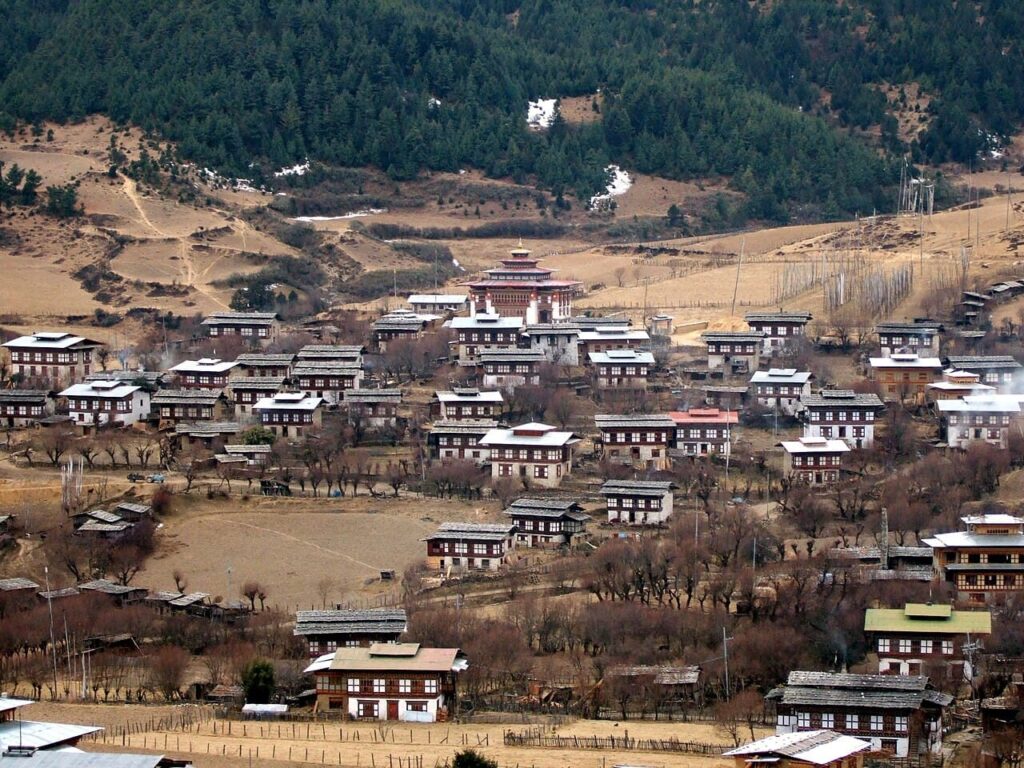
Tucked into the folds of the eastern Himalayas, Ura Valley feels like a forgotten whisper of old Bhutan. It remains one of the few places to visit in Bhutan where modern life hasn’t yet dulled the rhythm of rural wisdom. The high-altitude hamlet, often cloaked in drifting fog and wildflower meadows, is one of the kingdom’s most untouched and traditional settlements.
At over 3,100 meters above sea level, Ura is the highest valley in Bumthang, and that elevation gives it a distinct charm: stone houses with carved wooden windows, blue pine forests, and villagers who speak a unique dialect called Ura-kha.
Walking through Ura feels like stepping into a painting of pastoral life. There’s a deep serenity here, sharpened by the altitude and softened by the scent of pine and juniper on the wind.

Don’t miss:
- Ura Lhakhang: The village temple sits like a crown jewel on a hill above the clustered homes. Though modest in size, it radiates peace and has a deep-rooted history tied to Guru Rinpoche. Locals believe the temple protects the entire valley from misfortune, and visiting during festivals fills the space with mask dances, chanting, and a rare sense of collective joy.
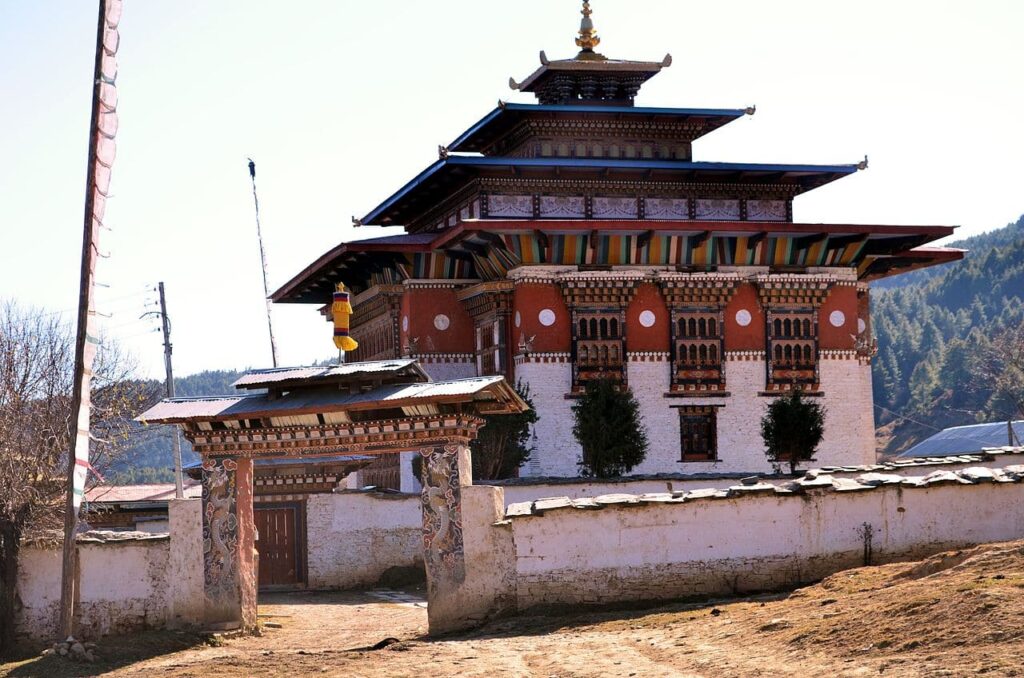
- The Ura Yakchoe Festival: Held in spring, this is one of the most spiritually charged yet intimate festivals in Bhutan. It honors a sacred relic believed to have miraculously appeared centuries ago and includes mask dances and communal rituals with deep symbolic significance. Unlike the larger tshechus, this one remains deeply local — if you’re lucky enough to attend, you’ll be welcomed like a long-lost cousin.
- Hikes & slow wandering: Ura is perfect for slow travel. Meandering trails lead you past potato fields, grazing sheep, and fluttering prayer flags. The Ura-Shelthang La hike (for more adventurous travelers) offers sweeping views across the valley and occasional sightings of yaks and even Himalayan monals, Bhutan’s national bird.
5. Mebar Tsho (“Burning Lake”): A portal to Bhutan’s mysticism
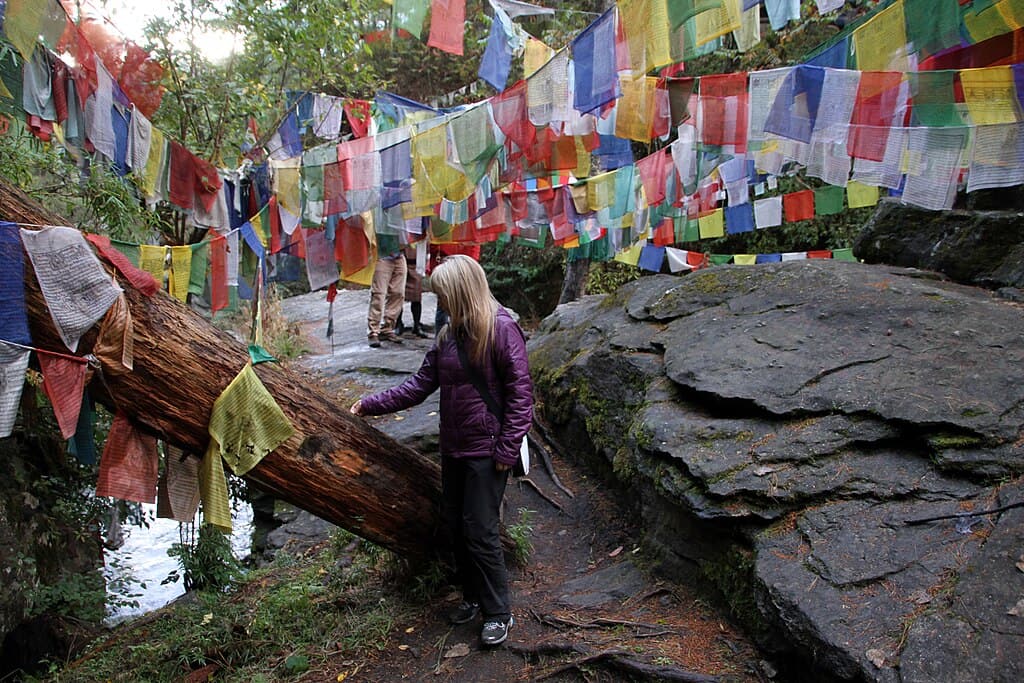
At first glance, Mebar Tsho, or the “Burning Lake”, doesn’t resemble a traditional lake at all. It’s a widening of the Tang Chhu River, nestled within a rocky gorge in the Tang Valley of Bumthang. But don’t let its modest scale fool you. This sacred site is one of the most spiritually powerful places to visit in Bhutan, and its story is etched deeply into the country’s religious consciousness.
According to legend, the revered 15th-century tertön (treasure revealer) Pema Lingpa — a spiritual ancestor to Bhutan’s kings — dove into these very waters holding a lit butter lamp. When he emerged moments later, he was not only holding sacred treasures hidden by Guru Rinpoche centuries before… the lamp was still alight. From that moment, this place became known as Mebar Tsho.
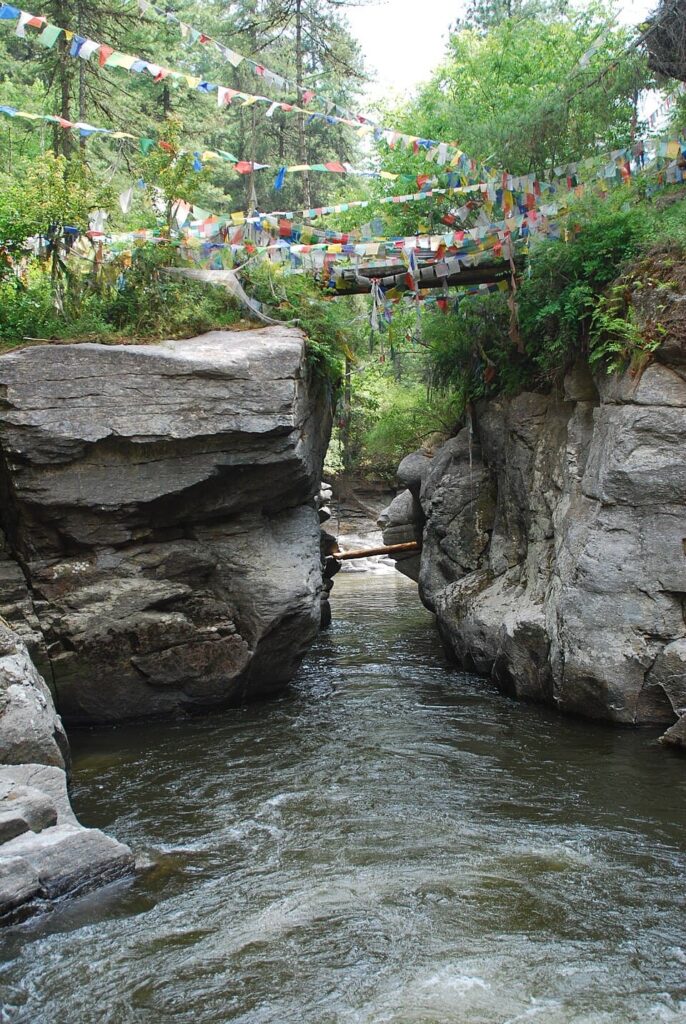
For pilgrims and travelers alike, the site is less about visual spectacle and more about spiritual weight. There’s a stillness here, a hush, as if the cliffs and cypress trees themselves are in reverence. Visitors are encouraged to be respectful and cautious near the gorge.
Don’t miss:
- Tying your own prayer flag: If you’ve brought a personal prayer flag or wish to purchase one nearby, tying it at Mebar Tsho is considered incredibly auspicious — particularly for travelers seeking safe journeys or new beginnings.
- Photographing the gorge from above: The view from the stone steps before you reach the water offers the best vantage point. Capture the waterfall’s movement, the flags, and the dark mystery of the lake in one frame.
6. Phobjikha Valley: Where nature and spirituality converge
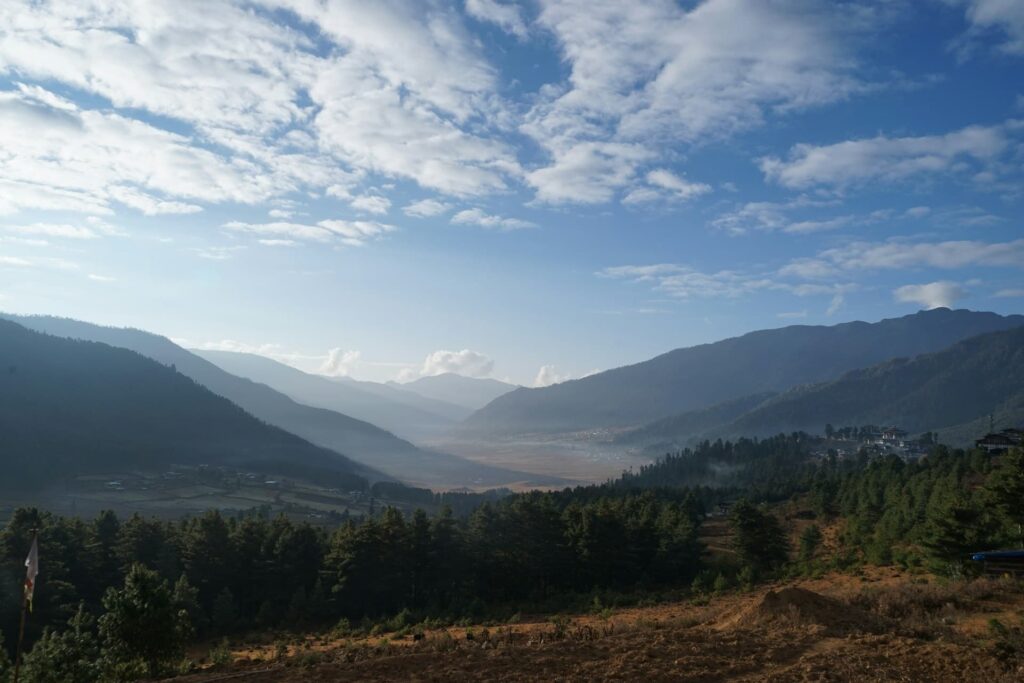
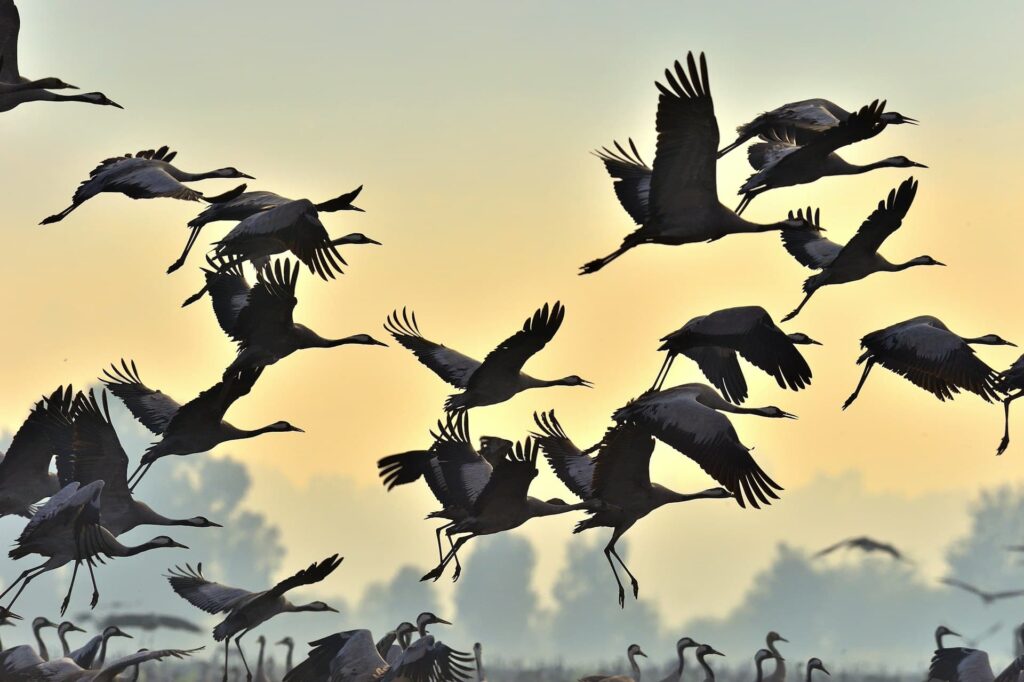
Cradled at 3,000 meters in the Black Mountains, Phobjikha is one of the most unforgettable places to visit in Bhutan. The valley feels like a place that time forgot — a bowl-shaped glacial valley with no traffic lights, no honking horns, and no tangled power lines (all utilities here are underground, to protect the valley’s wildlife and vistas). This protected area is one of Bhutan’s most important conservation regions — and home to the endangered black-necked cranes, which arrive every winter from the Tibetan Plateau in a migration steeped in legend.
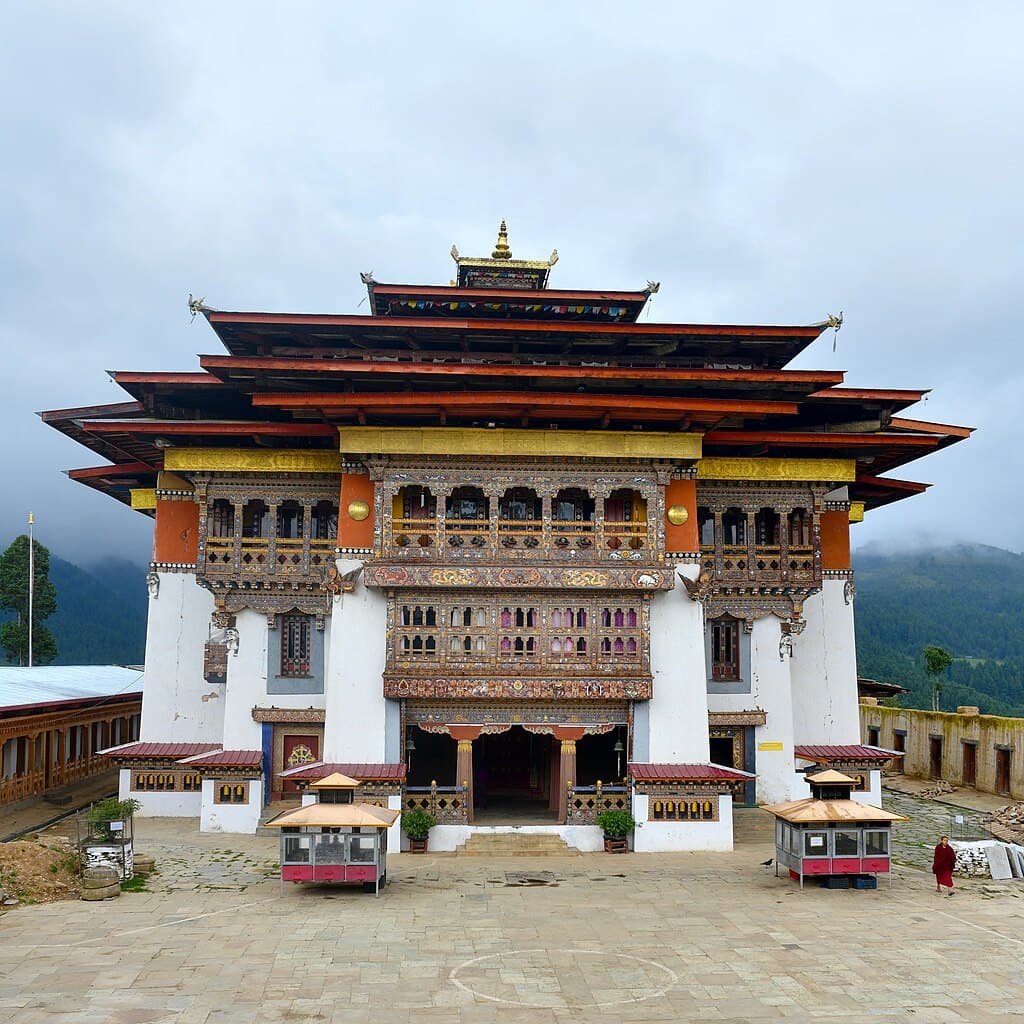
Overlooking the valley is Gangtey Monastery (Gangtey Goemba), a 17th-century treasure and the most prominent Nyingma school monastery in western Bhutan. Monks here chant in a chamber scented with centuries of incense, while the views outside stretch across the wetlands and forests below — an almost cinematic meeting of spiritual architecture and alpine serenity.
Don’t miss:
- The black-necked crane migration: Between late October and February, over 600 black-necked cranes descend gracefully into the valley. Their arrival is celebrated with the Black-Necked Crane Festival on November 11 at Gangtey Monastery — a colorful, heartfelt celebration with traditional dances performed by local schoolchildren and masked monks alike. According to legend, the cranes circle the monastery three times upon arrival — a gesture believed to be a spiritual salute.
- Hiking the Gangtey Nature Trail: One of Bhutan’s most accessible and scenic walking trails, the Gangtey Nature Trail weaves through pine forests, small farms, and crane observation points, offering expansive views across the valley floor. It’s a perfect 1.5 – 2 hour hike for those craving both solitude and stunning panoramas.
- Visit the Gangtey Monastery: Founded in 1613 by Pema Thinley, a grandson of Bhutan’s great spiritual treasure-revealer Pema Lingpa, this monastery was the first Nyingma institution west of the Black Mountains. Recently restored, the complex includes monk residences, a central prayer hall, and a sacred chorten (stupa) — all surrounded by wild blue pine.
7. Stay the night at ABC Eco Lodge: Bhutanese hospitality in the wild
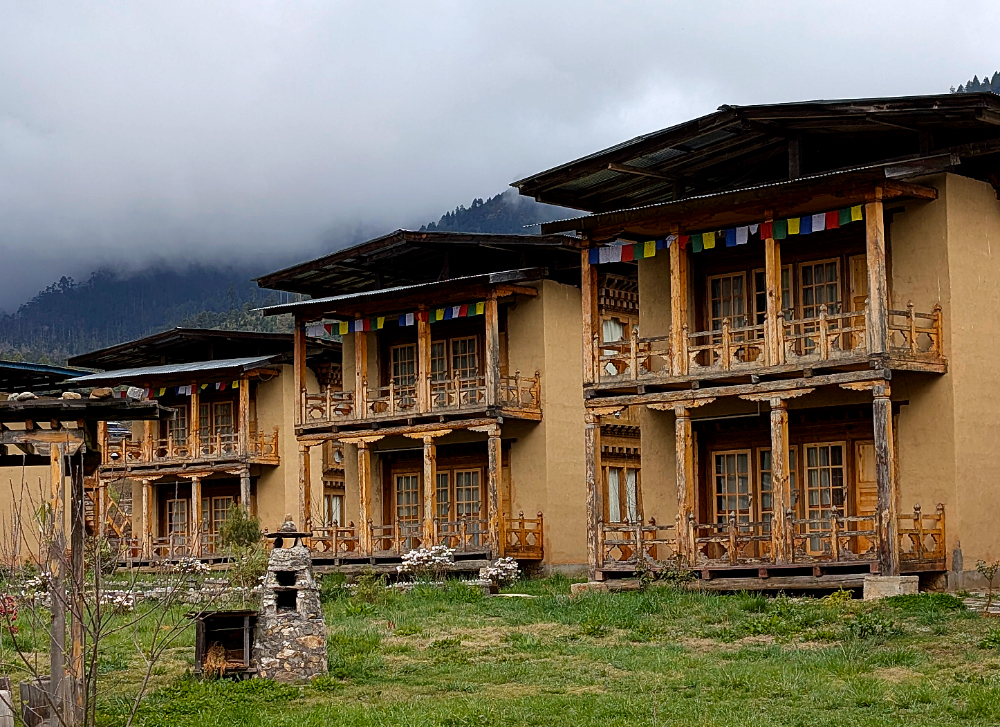
Tucked away in the forested outskirts of Phobjikha Valley, ABC Eco Lodge is where Bhutanese charm meets off-grid tranquility. More than just a place to sleep, it’s a stay that invites you to slow down, breathe deep, and immerse yourself in the rhythms of rural Bhutan. Expect simple farm-to-table meals and warm hospitality.
Built in traditional Bhutanese style using timber, stone, and earth, the lodge radiates rustic warmth. Rooms are dressed in yak wool throws, hand-carved furniture, and flickering lanterns. Solar power supplies just enough energy for soft lighting and hot showers — the rest is pure nature.
Why ABC Eco Lodge is worth the stop:
- Proximity to Gangtey Monastery & Nature Trail: Just a short drive from Gangtey Monastery, the lodge offers easy access to the Gangtey Nature Trail, a beloved 2-hour hike that begins near the monastery and winds through forest, farmland, and open valley views. Start in the golden afternoon light and finish with a panoramic view of cranes gliding across the wetlands.
- Wildlife and stargazing: Located within Bhutan’s black-necked crane conservation area, the lodge is a quiet observation post in winter months (October to February). When the sun sets, Phobjikha’s dark skies come alive with stars — the Milky Way visible in astonishing clarity, often accompanied by the hush of frost settling on the fields.
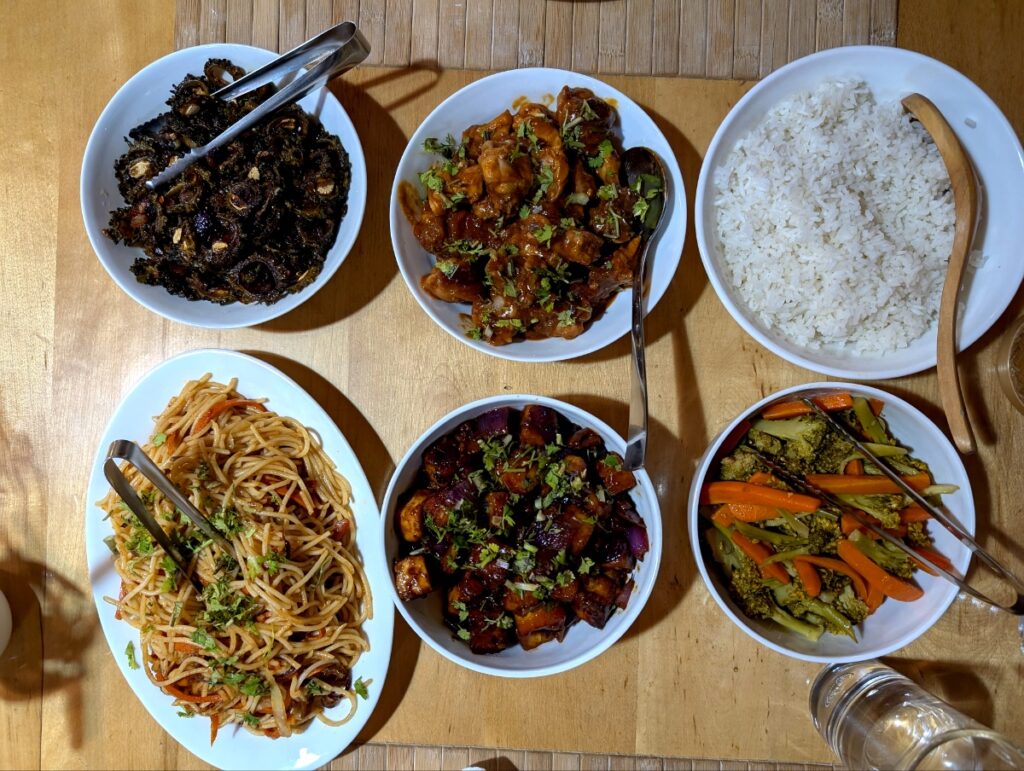
- Local, organic cuisine: Meals are home-cooked and seasonal, with produce from nearby farms and traditional recipes handed down through generations. Try the mushroom buckwheat pancakes, spicy jasha maroo (chicken stew), and roasted root vegetables harvested the same morning.
8. Gaselo: A hidden home between valleys
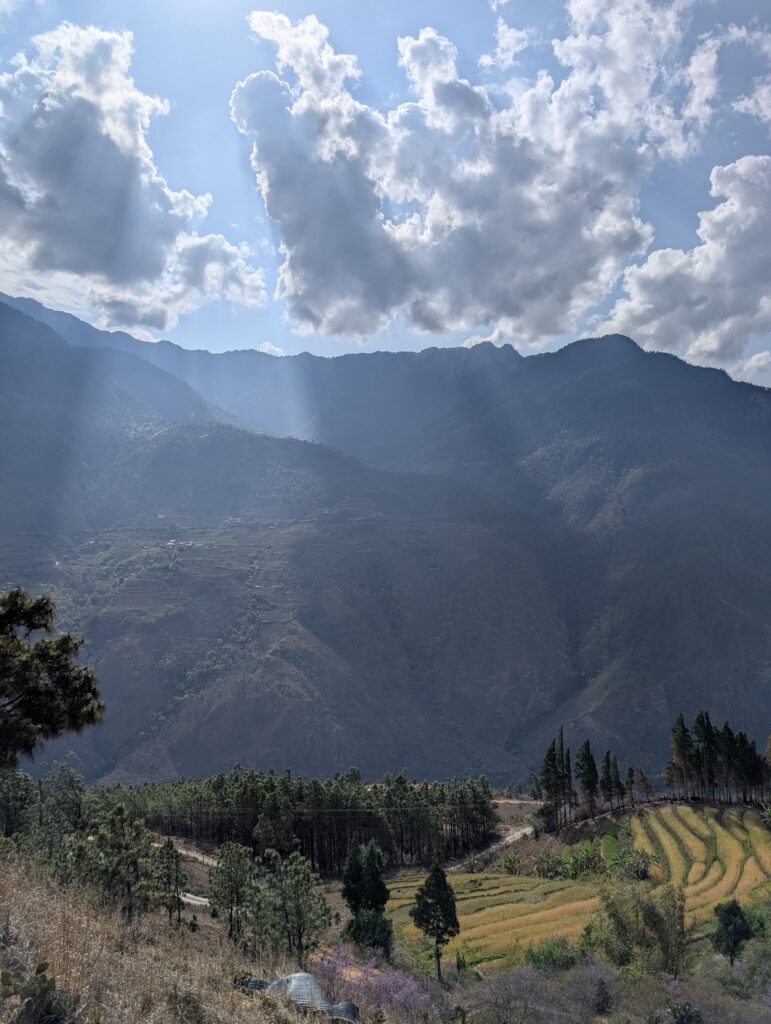
Tucked between the folds of Punakha and Wangdue, Gaselo is one of Bhutan’s most under-the-radar gems — a place where time flows like the river below, slow and silvery. Few travelers pass this way, but those who do are rewarded with soulful quiet, expansive valley views, and a kind of everyday magic that lingers in the air.
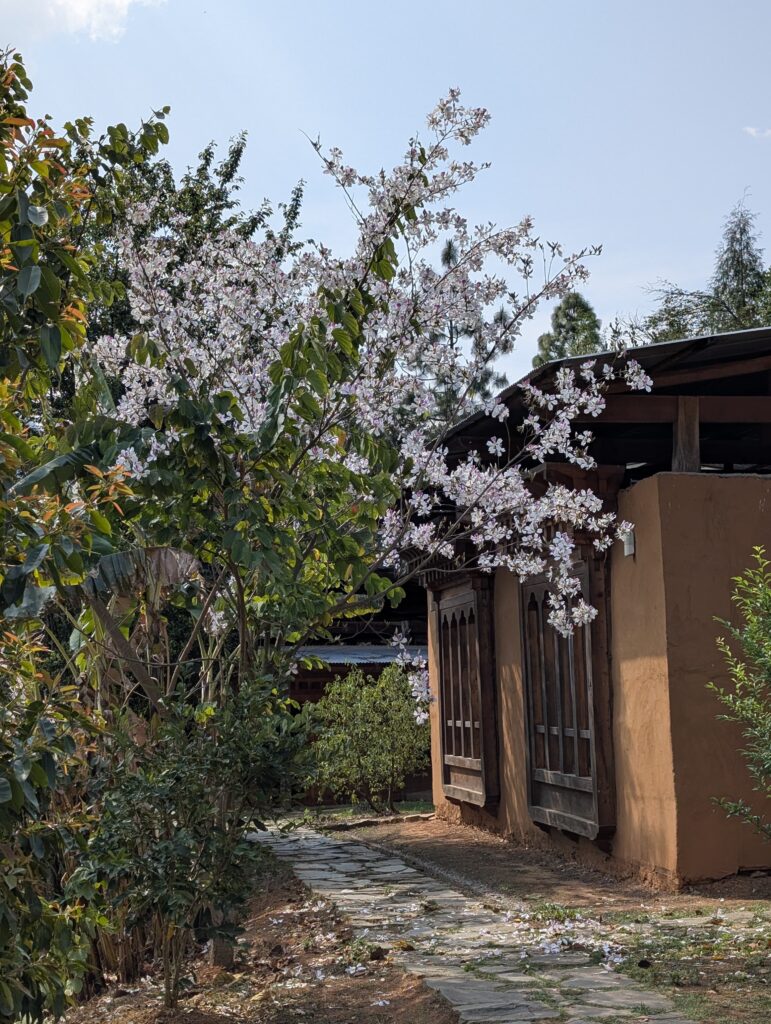
Gaselo isn’t a major town. It’s a scattering of family farms, terraced fields, and traditional homes connected by dirt paths and waving prayer flags. The surrounding hills are threaded with pine forests, and in spring, wildflowers spill across the slopes. What makes this village special isn’t any one landmark, but rather the feeling it gives you — that you’ve wandered into someone’s ancestral dream.
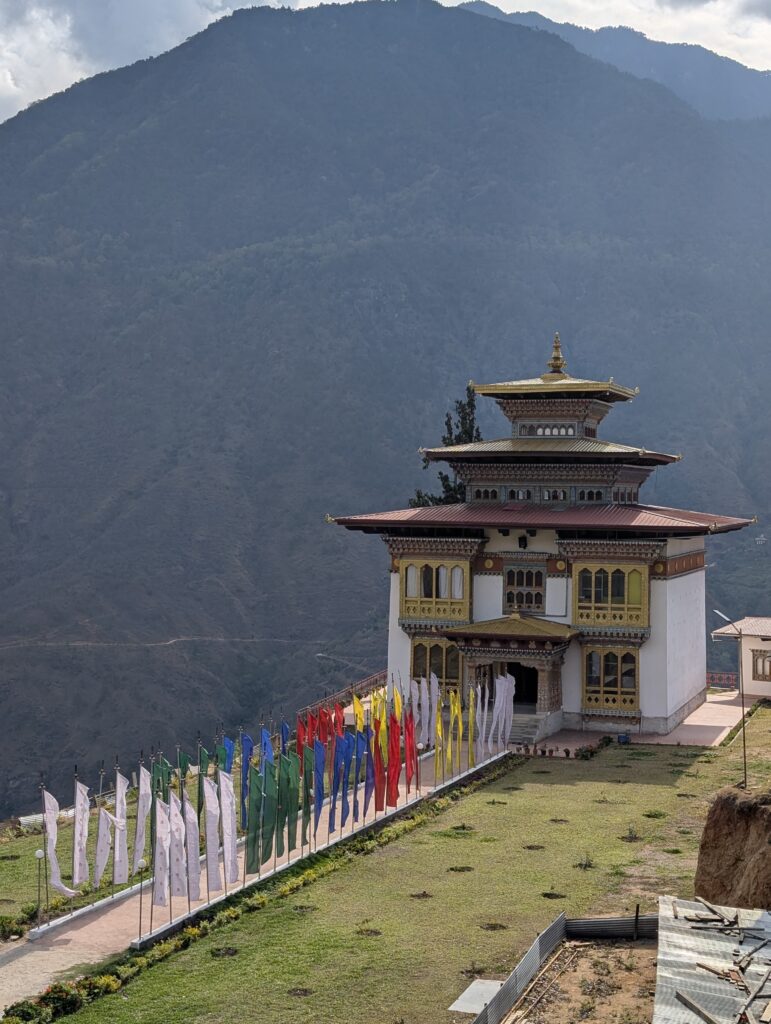
A stay here offers a rare window into Bhutanese rural life, still deeply connected to seasonal rhythms, storytelling traditions, and ancient wisdom. Discover the peaceful Thukten Chhoe Tsuklakhang, and spend a night at the Gaselo Eco Lodge for wholesome farm-to-table meals, wood-fire heating, and optional walks to nearby forest trails. It’s a true slow-travel experience, ideal for reflection, connection, and deep rest.
Bonus hidden gem: Dodedrak Buddhist Monastery
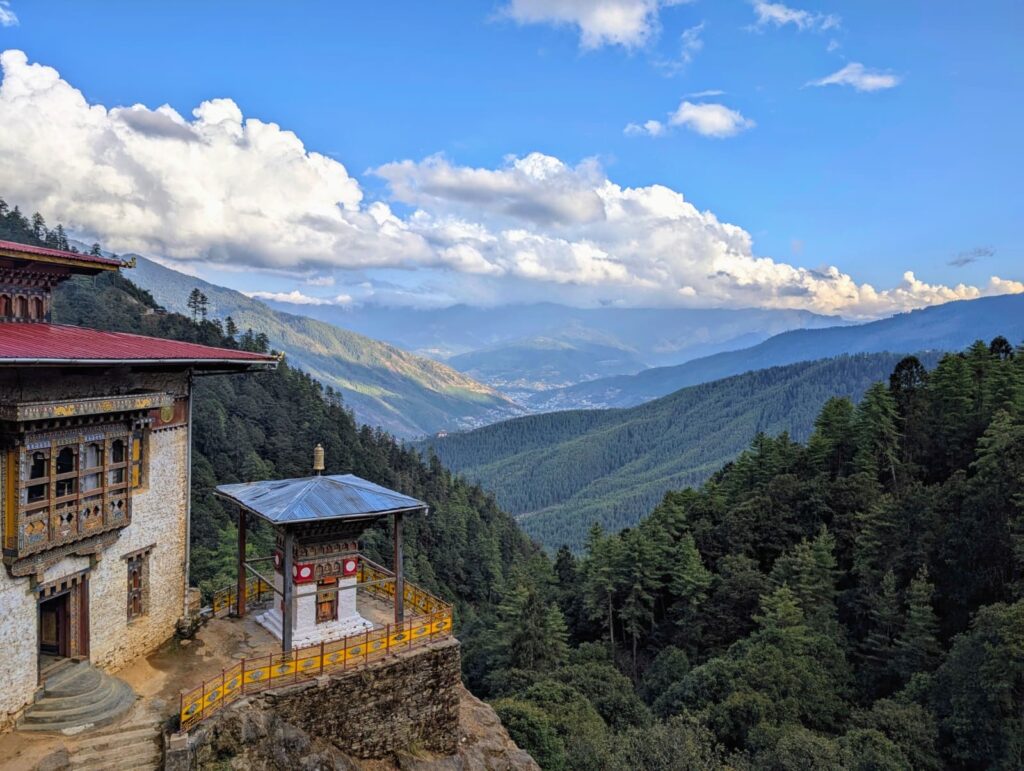
Once you’re back in Thimphu, there’s a remote experience just above the capital that’s worth carving out a night for. Tucked north of the city, the Dodedrak (Dodeydra) Buddhist Monastery clings to a cleft of rock like a secret — accessible only on foot and still blissfully under the radar. The hike (about 5 – 6 kilometers one way) with an elevation gain of ~600 meters, brings you to the monastery that sits roughly 3,000 meters above sea level.
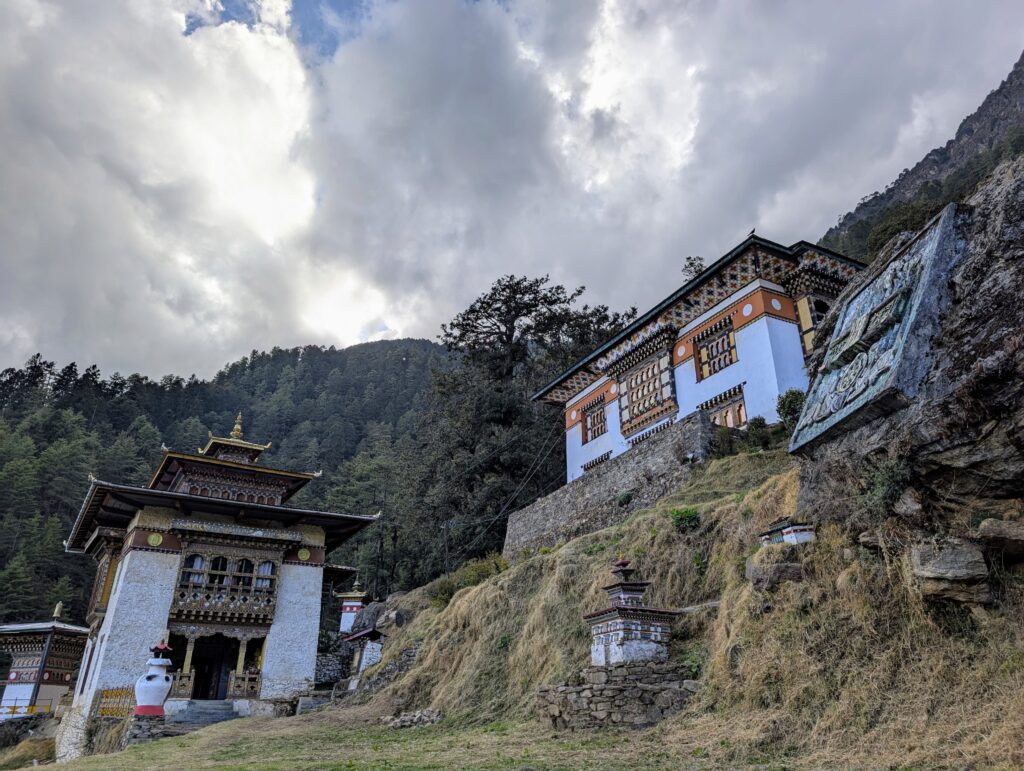
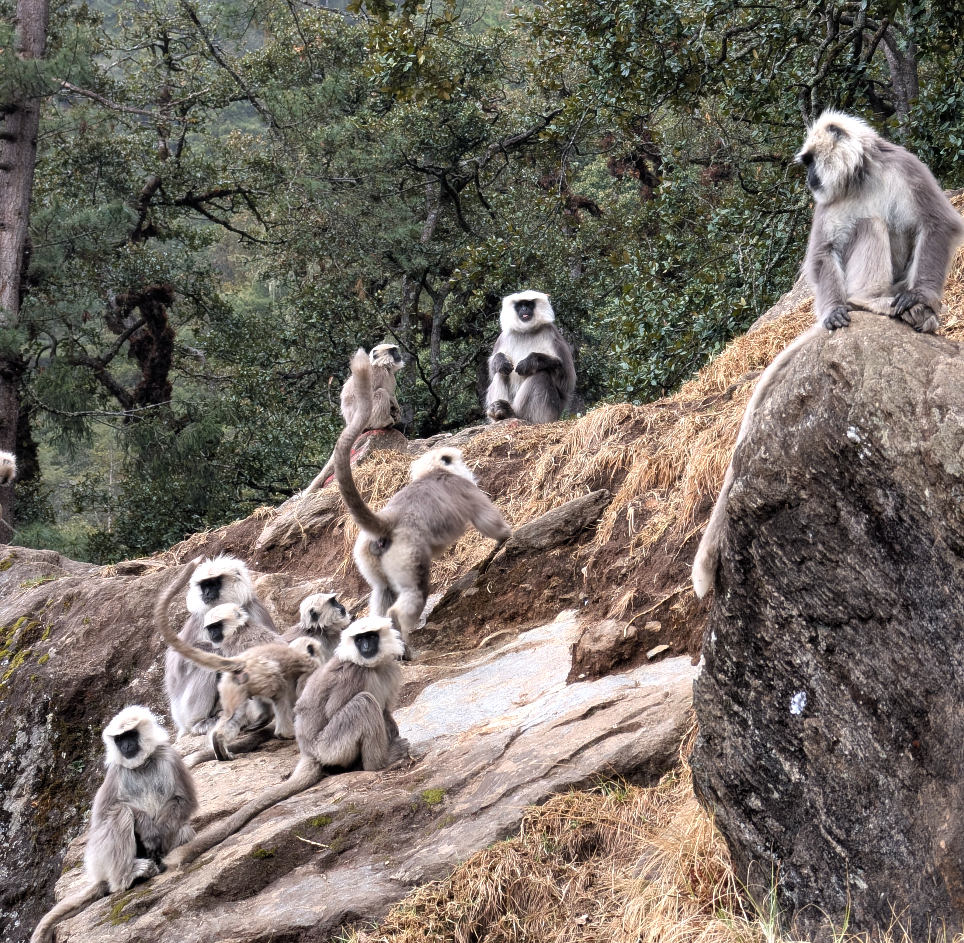
With prior arrangement, simple guest rooms let you stay a night for meditation and sunrise — an unforgettable way to experience monastic life. A stay here rewards you with hushed courtyards, cliff chapels, and wide-angle views over the capital far below. Keep an eye out for gray langurs and Assam macaques in the pines — they’re common in the Thimphu area. Enjoy them at a respectful distance and secure any snacks.
Why it’s a “hidden” bonus: Although it sits near Thimphu, Dodedrak still feels worlds away. It’s an intimate, cliff-hugging sanctuary that pairs perfectly with an itinerary filled with quiet hidden gems.
🌿 Let TourHero help you discover Bhutan’s hidden side
Exploring Bhutan’s hidden gems takes local knowledge, thoughtful pacing, and a deep respect for culture. With TourHero, you can create a customized itinerary with the help of experienced travel planners who know Bhutan inside and out. Whether you’re dreaming of vibrant festivals, sightseeing experiences, or incredible hikes, we’ll help you create a journey filled with meaning — with zero stress.
✅ Fully customizable group trips
✅ Connect with local guides
✅ Flexible payment plans
✅ Travel with your community, or meet like-minded adventurers
✅ Earn while you explore (yes, really!)
Ready to create something unforgettable?
👉 Host a group trip to Bhutan — plan the ultimate adventure with TourHero.
🧳 Frequently asked questions
We answer some of the more common questions to help you prepare for a seamless visit to Bhutan.
Is it safe to travel to remote villages in Bhutan?
Yes — Bhutan is one of the safest countries in the world. Even in remote areas like Ura and Tang, crime is virtually nonexistent. However, some roads can be winding and narrow. A local driver / licensed guide is necessary.
Do I need a visa to visit Bhutan?
Yes. All international travelers (except citizens of India, Bangladesh, and the Maldives) must obtain a Bhutanese visa in advance, which is typically arranged through a licensed tour operator, or one of their international partners, and requires confirmed travel arrangements (itinerary, accommodations, guide).
How do I fly into Bhutan?
All international travelers arrive via Paro International Airport (PBH), Bhutan’s only international airport. Flights are limited and operated by Drukair (Royal Bhutan Airlines) and Bhutan Airlines, so it’s best to book early. The most common hubs with direct flights to Paro include Bangkok (BKK), Kathmandu (KTM), Delhi (DEL), Kolkata (CCU), and Dubai (DXB). Routes are scenic but weather-dependent, so delays can occur, especially in the monsoon season.
What is the Sustainable Development Fee (SDF)?
As of 2025, Bhutan charges a Sustainable Development Fee of USD 100 per person, per night, which supports the country’s education, healthcare, and environmental programs.
What should I pack for a trip to remote Bhutan?
- Layers (weather changes quickly in the mountains)
- Comfortable hiking shoes
- Sun protection
- Modest clothing for temples
- Reusable water bottle
- Motion sickness medication (for winding roads)
- Power bank (electricity can be spotty in remote areas)
Can I visit Bhutan without a tour?
No. Independent travel is not allowed. You must book your trip through a licensed Bhutanese tour operator or an approved international partner. TourHero, for example, can help customize and facilitate group trips or host immersive community journeys in Bhutan.
Is English spoken and Wi-Fi available in remote areas?
English is widely spoken by guides, hotel staff, and many locals. However, Wi-Fi is limited in rural regions. Some lodges offer internet, but speeds may be slow. It’s a good opportunity to disconnect and immerse.
About TourHero
TourHero is a social travel platform that enables you to travel with like-minded people and fall in love with the journey. We work closely with handpicked local operators to ensure every experience curated is unique and exclusive to your travel group. Come with us on epic adventures and create memories that last a lifetime. Get started here!